Introduction
The modern global marketplace offers unparalleled opportunities for brands to scale infrastructure, engage high-intent consumers, and cultivate market authority. Yet, a paradox persists in the corporate landscape: thousands of enterprises consistently inject capital into web development, social media pipelines, and paid customer acquisition without achieving measurable growth.
The underlying issue is structural. Sustainable commercial expansion isn't driven by disconnected marketing campaigns; it is the product of an interconnected digital architecture. A visually striking user interface yields zero ROI without search visibility. High social media engagement fails to transition into corporate revenue if your onboarding pipeline lacks trust. Running targeted ad traffic to an unoptimized interface simply drains capital.
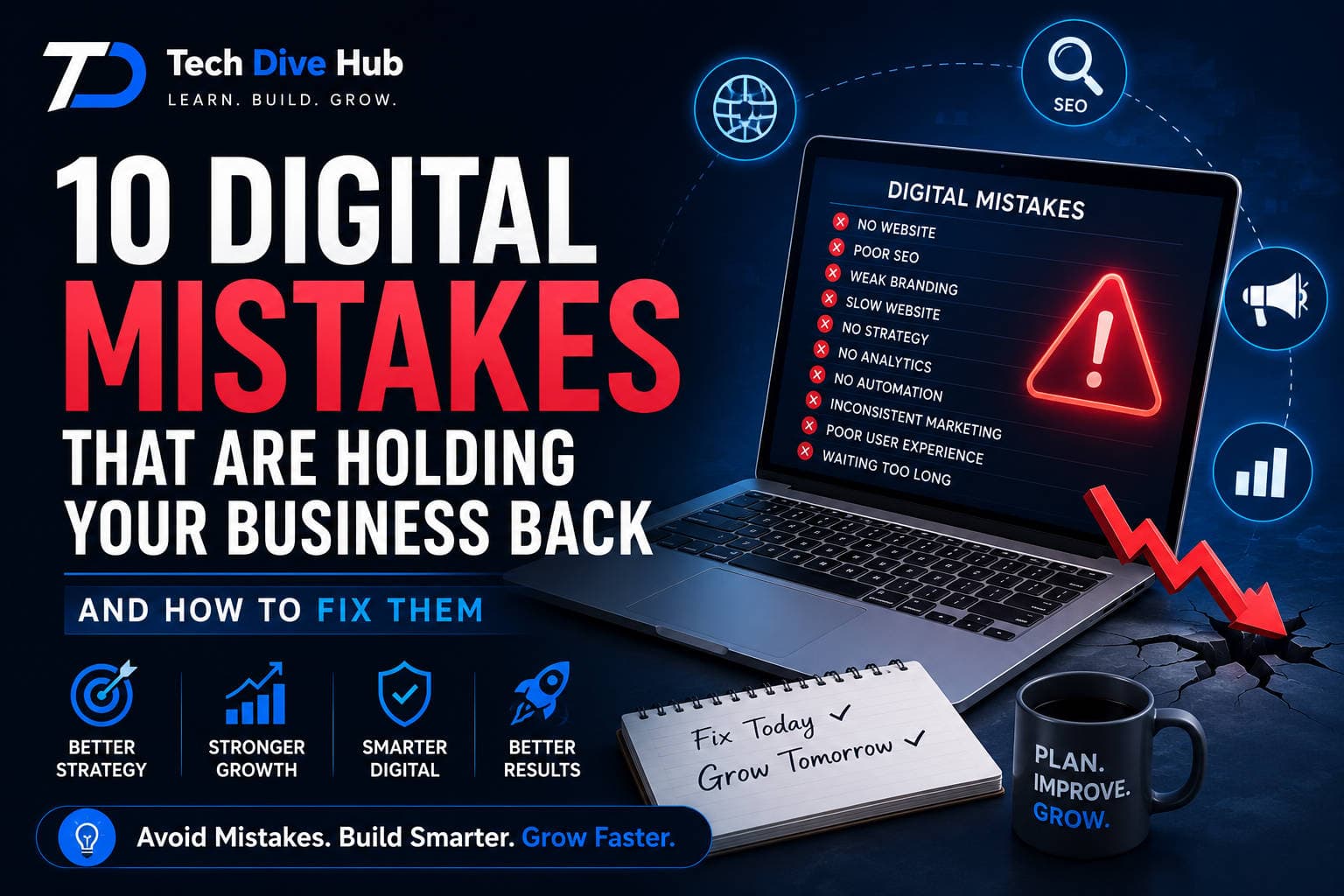
To overcome these roadblocks, organizations must identify their core operational flaws. This comprehensive guide breaks down ten critical digital business growth mistakes and outlines an actionable online business improvement strategy to transform your digital presence into a highly automated lead generation system.
1. Treating Your Website Like a Digital Brochure
A common systemic error among growing enterprises is treating their primary web property as a static corporate index card—built once, left unmanaged, and isolated from core workflows. A modern enterprise portal cannot simply exist as passive reading material. It must serve as an active, high-performing asset designed to execute specific revenue operations.
To transition from a static brochure to a high-conversion platform, your system must handle complex, automated customer actions seamlessly:
Generate High-Intent Leads: Deploying progressive data capture forms linked directly to your database infrastructure.
Cultivate Brand Trust: Displaying dynamically managed case studies and real-time social proof.
Solve Client Bottlenecks: Structuring self-contained resource layers that answer critical target audience inquiries instantly.
Showcase Domain Authority: Hosting deep technical analyses and industry whitepapers.
Drive Immediate Action: Implementing explicit, highly visible Calls to Action (CTAs) tailored to distinct user intents.
When properly configured via professional /services/website-development, your interface transforms into your most efficient, round-the-clock sales professional.
2. Ignoring Mobile Users & Responsive Spacing
Mobile traffic systematically dominates global internet consumption. Despite this shift, many organizations still launch corporate platforms that are unoptimized for mobile architecture. Experiencing broken navigation systems, overlapping typography, or slow-loading viewports causes mobile users to leave your site within seconds, signaling high bounce rates to search engines.
A modern mobile strategy requires deploying fluid, flexible grid layouts that adjust seamlessly across varying screen formats. Touch target boundaries must be large enough to prevent navigation frustration, and media elements must scale dynamically to prevent horizontal scrolling. Prioritizing mobile responsiveness ensures your systems remain highly accessible, improving engagement and protecting your search engine placement.
3. Weak & Fragmented Branding Architecture
Many business leaders incorrectly assume that corporate branding begins and ends with a logo design. Operating with a weak, inconsistent visual structure severely damages market credibility. When a user transitions from a highly polished LinkedIn profile to an unoptimized web page, the sudden shift in quality damages brand trust.
A highly authoritative corporate identity requires strict alignment across multiple design elements:
Cohesive Palette Schemes: Deploying a standardized set of high-contrast brand colors across all platforms.
Professional Typography Rules: Restricting layouts to a defined font hierarchy to establish editorial structure.
Clear Value Propositions: Crafting concise, direct brand language that communicates your primary mission.
Premium Custom Media: Utilizing unique monograms, custom icons, and vector elements rather than overused stock graphics.
Unified Multi-Channel Output: Maintaining visual and textual consistency across every digital public touchpoint.
Investing in comprehensive /services/branding turns an obscure market presence into a recognizable, trustworthy, and premium corporate asset.
4. Forgetting About Long-Term SEO Foundations
Launching an exceptional web infrastructure without integrating a technical search strategy is the equivalent of opening a brick-and-mortar storefront inside an unmapped alleyway. Search Engine Optimization (SEO) isn't a post-launch add-on; it is the core framework that allows high-intent clients to discover your business naturally when searching for specialized solutions.
An effective organic search framework requires combining several critical technical components:
Targeted Keyword Research: Aligning page copy with the precise terms your audience searches for.
Optimized Code Structure: Keeping DOM depths shallow to allow clean search engine crawling.
Clean URL Slugs: Using clear, lowercase, hyphen-separated directory structures.
Logical Internal Linking: Building clear navigation pathways between your informational articles and main service pages to distribute page authority effectively.
Structured Content Layers: Publishing highly authoritative text that addresses complex consumer questions.
Advanced On-Page Schema: Embedding JSON-LD scripts to provide search engine bots with explicit context regarding your business services.
Integrating professional /services/seo from day one ensures steady visibility and sustainable customer acquisition without relying solely on paid ad spend.
5. Publishing Content Without a Content Strategy
Many organizations mistake standard post frequency for actual marketing effectiveness. Publishing random updates without an underlying strategic goal wastes internal team resources and alienates high-value audiences.
Your publication framework should focus on providing genuine utility. Instead of pushing generic updates, structure your schedule around content that clarifies complex concepts, breaks down technical case studies, and delivers definitive solutions to industry bottlenecks. Providing actionable insights helps position your brand as a clear thought leader, turning casual readers into long-term clients.
6. Ignoring Core Performance & Website Speed
In a fast-paced digital environment, speed is a critical factor for conversion success. A latency delay of even two seconds can cause user abandonment rates to skyrocket. Slow platforms degrade user experience and hurt search performance, as search engines favor fast-loading pages.
Optimizing page performance requires addressing several common technical bottlenecks:
Modern Web Architectures: Building on advanced frameworks like Next.js, TypeScript, and Tailwind CSS to ensure fast execution.
Advanced Media Compression: Converting large legacy images into lightweight web formats like WebP or AVIF.
Code Optimization: Minifying server-side JavaScript scripts and eliminating unused CSS rules.
Strategic Server Caching: Utilizing intelligent edge caching to serve data closer to the user's physical location.
Font Architecture Optimization: Using modern, optimized system fonts to eliminate layout shifts during page loads.
Improving your platform's response speed significantly lifts user retention and helps maximize the return on your marketing investments.
7. Operating Blindly Without Performance Tracking
Managing digital expansion without leveraging real-time data tracking means relying entirely on guesswork. Without analytical tracking, it is impossible to determine which channels generate profitable leads and which are underperforming.
An data-driven online business improvement strategy relies on monitoring specific core metrics:
Organic and Paid Traffic Flows: Tracking exactly how visitors find your platform.
User Behavior Mapping: Analyzing how users navigate through your information architecture.
Conversion Rate Performance: Measuring the exact percentage of visitors who take action.
Page Value and Exit Points: Locating technical bottlenecks where users abandon your pipeline.
Campaign Attribution Performance: Tracking the specific source of inbound leads.
Relying on clear data analytics helps ensure your marketing budget is directed toward the highest-performing channels.
8. Relying on Outdated Manual Processes
Wasting valuable team resources on manual data entry, manual message routing, and spreadsheet management creates operational drag. These slow, legacy workflows limit your scalability and introduce human error into critical customer data touchpoints.
Transitioning to automated digital operations lets your team focus on high-value business development projects:
Automated Lead Processing: Instantly mapping website form submissions directly to your internal CRM system.
Unified Booking Portals: Syncing real-time calendars to allow clients to schedule consultations without manual coordination.
Triggered Email Sequences: Deploying targeted follow-up messages automatically based on user actions.
Instant Notification Systems: Setting up real-time internal team alerts via modern communication APIs like Webhooks.
Implementing specialized automation tools streamlines workflows and ensures your backend operations can handle sudden increases in demand effortlessly.
9. Maintaining an Inconsistent Multi-Channel Customer Experience
Modern consumers interact with brands across fluid digital touchpoints before finalizing an engagement. If a prospect encounters an exceptional website, but faces slow, unoptimized communication channels on other platforms, the disconnect damages brand trust.
Maintaining a reliable digital ecosystem requires absolute consistency across all channels:
Your primary web infrastructure
Professional social channels (LinkedIn, YouTube, X)
Direct email and automated campaigns
Instant message routing channels (WhatsApp, Telegram)
Your local Google Business Profile listing
Aligning your messaging, visuals, and responsiveness across every interface gives clients a smooth, predictable path toward doing business with you.
10. Postponing Necessary Digital Infrastructure Upgrades
Many business owners wait until they experience an absolute drop in conversion metrics or a loss of market share before addressing their digital limitations. In technology, waiting to respond means falling behind. Proactively updating your infrastructure is much more efficient than trying to save a declining platform.
Continuous iterative updates provide a powerful competitive advantage. Regularly optimizing your code base, refining your keyword targets, and updating your automation pipelines keeps your business ahead of competitors and perfectly aligned with modern consumer expectations.
Building a Strong Digital Foundation
Market dominance is achieved by engineering a unified digital ecosystem where every tool work in sync.
┌─────────────────────────────────────────────────────────────┐
│                 SUSTAINABLE BUSINESS GROWTH                 │
└──────────────────────────────▲──────────────────────────────┘
                               │
 ┌─────────────────────────────┴─────────────────────────────┐
 │               INTEGRATED DIGITAL FOUNDATION               │
 └─▲───────────────▲────────────────▲───────────────▲─────────┘
   │               │                │               │
┌──┴──────────┐ ┌──┴──────────┐ ┌──┴──────────┐ ┌──┴──────────┐
│ Performance │ │  Technical  │ │  Automated  │ │ Consistent  │
│  Web Stack  │ │   SEO Core  │ │  Workflows  │ │ Visual Identity
└─────────────┘ └─────────────┘ └─────────────┘ └─────────────┘
When your web presence, organic search visibility, visual identity, and automated backend work together as a single system, your business naturally attracts higher-value traffic and builds sustainable commercial growth.
How Tech Dive Hub Can Help
At Tech Dive Hub, we engineer custom technical solutions designed to replace fragmented legacy workflows with unified digital growth systems. Our multidisciplinary team builds the core infrastructure modern enterprises need to grow:
Custom Website Development: Designing lightning-fast, production-ready systems using modern web frameworks.
Strategic Digital Marketing: Running highly targeted, data-backed acquisition campaigns.
Corporate Branding Architecture: Creating professional monograms, visual standards, and custom brand designs.
Advanced Search Engine Optimization: Managing comprehensive technical, on-page, and local SEO campaigns.
AI & Workflow Automation: Deploying smart software integrations and automated communication pipelines.
High-End UI/UX Design: Structuring smooth user journeys engineered for high conversions.
We help your business shift from disconnected online activities to a complete, high-performance digital ecosystem.
Conclusion
Digital success is never an accident. It requires meticulous planning, a fast technical foundation, and the right modern technologies. By identifying and correcting these common digital business growth mistakes and choosing a comprehensive online business improvement strategy, your organization can expand its reach, improve operational efficiency, and capture long-term market market share.
If you are ready to upgrade your business infrastructure and build a highly automated web presence, our systems architects are here to guide your transition.
Call to Action
Ready to Scale Your Enterprise Operations Online? Partner with Tech Dive Hub to deploy an elite, high-conversion digital presence that drives real commercial results.
🌐 Official Website: https://techdivehub.com
📧 Corporate Communications: hello@techdivehub.com
📞 Direct Systems Desk: +91 88140 62377
Learn. Build. Grow.